.png)
Buying a Farm in Chile: Agricultural Land, Returns and Water Rights
- Matt Ridgway

- 18 hours ago
- 5 min read
Buying agricultural land can be one of the most interesting ways to approach real estate in Chile. It is a tangible asset with productive potential, and—when the land, water and location are right—it can combine rental income with long-term capital appreciation. But a farm should never be bought on headline numbers alone. The quality of the soil, security of water, local access, operating costs and realistic demand from tenants or growers determine whether a promising property becomes a sound investment.

Why consider buying a farm in Chile?
Chile’s geography gives agricultural investors an unusual range of climates, soils and growing conditions. Productive zones stretch from the central valleys into the south, with established agricultural services, export infrastructure and access to both domestic and international markets. For buyers comparing farms for sale in Chile, this diversity creates opportunities in raw farmland, leased agricultural property and directly operated orchards.
Well-bought raw farmland may produce annual rental income in the region of 4–6%, before costs and taxes, while also retaining exposure to capital gains over time. This is a working target rather than a guaranteed return: actual performance depends on purchase price, productive capacity, lease terms, water availability, improvements, local demand and the wider agricultural cycle. A conservative appraisal should test the investment against weaker rental demand, higher operating costs and periods of lower crop prices.
Rental income can be attractive for an owner who wants agricultural exposure without managing day-to-day production. A lease may transfer much of the operational work to an experienced farmer, but the agreement still needs careful drafting. Duration, indexation, maintenance, permitted crops, irrigation responsibilities, environmental obligations and the condition in which the land must be returned should all be clearly defined.
Permanent orchards: follow fundamentals, not fashion
Permanent fruit plantations require patience. Establishment costs are paid years before an orchard reaches mature production, and once trees are planted it is expensive to change direction. For that reason, it is usually better to avoid choosing a crop simply because it is currently fashionable or because one season’s prices look exceptional.
The stronger medium- to long-term strategy is to concentrate on crops with steady demand and proven annual returns, then confirm that the specific property can support them. Soil depth and drainage, winter chill, frost exposure, summer heat, water quality, irrigation efficiency, labour availability, harvest timing and access to processors or exporters all matter. A crop that performs well in one valley may be a poor choice only a short distance away.
Diversification can also reduce risk. Land capable of supporting several commercially viable orchard species gives an investor options as markets, technology and climate conditions evolve. The final planting decision should follow agronomic and financial studies rather than precede them.
Hazelnuts and Chile’s expanding role
Hazelnuts are a useful example of a crop supported by more than short-term enthusiasm. Chile has been developing into an increasingly important global supplier, helped by its counter-seasonal harvest, productive growing areas and major investment in orchards and processing.
Official investment information illustrates the scale of that expansion. InvestChile reported that planted hazelnut area rose from 8,712 hectares in 2015 to about 50,000 hectares in 2025, while Ferrero estimated the area at more than 60,000 hectares. The same source reported Chilean yields of around three tonnes per hectare—roughly double or more than the 1–1.5 tonnes cited for other producing regions—and annual exports of around US$600 million. Ferrero has also continued investing: after opening its second Chilean processing plant in Ñiquén with a US$75 million investment, the company announced a further US$94 million investment program.
The processing base is broadening as well. Turkish hazelnut company Balsu established agricultural and industrial operations in Chile, planted orchards and developed a high-technology processing facility. This matters because local processing capacity, storage and established buyers can strengthen the supply chain for growers; it does not, however, remove normal production and price risk.
For supporting information, see Ferrero’s announcement on its Ñiquén processing plant, InvestChile’s report on Ferrero’s latest investment and the growth of Chilean hazelnut production, and Balsu’s information on its Chilean orchards and processing operation.
An example of versatile agricultural land
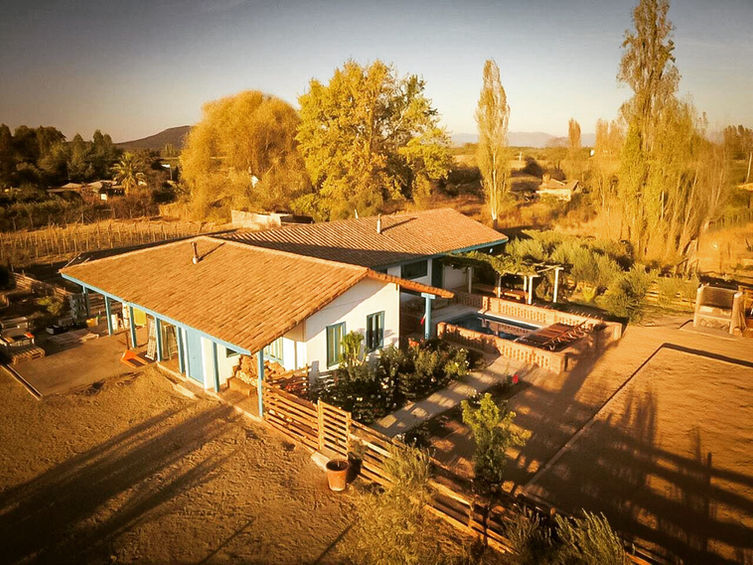
This farm property for sale in Chile is an example of land suitable for several types of permanent fruit orchard, including hazelnuts. That flexibility is valuable: it allows a buyer to compare crops against the property’s soils, microclimate, water supply, establishment budget and access to processing before committing capital.
As with any property for sale in Chile, suitability should be independently verified. A buyer should commission soil and water analyses, an agronomic assessment, a topographical review where relevant, title due diligence and a realistic development budget. Existing roads, electricity, irrigation works and proximity to labour can have a major effect on the true cost of bringing raw land into production.
Water rights are essential due diligence
Agricultural land may look excellent and still be a poor investment if its water position is weak. In Chile, a farm purchase and the associated water rights require separate, detailed investigation. The deed or administrative resolution should be reviewed together with the nature and volume of the right, source, point of capture, legal registrations, actual physical availability, irrigation infrastructure and any restrictions, debts or non-use charges.
The Dirección General de Aguas has stressed the importance of registering water rights both with the relevant Conservador de Bienes Raíces and in the Catastro Público de Aguas. Registration on paper is only part of the analysis: a technical specialist should also confirm whether the water can reliably be delivered to the land in the required season and volume. Climate variability, watershed pressure and infrastructure condition can make the practical supply different from the nominal entitlement.
Before signing, use an independent Chilean lawyer experienced in rural title and water law, together with an agronomist or water specialist. Confirm what rights are included in the sale, whether they are properly registered and transferable, whether extraction works are authorised, and whether the planned orchard’s peak irrigation demand can be met. The DGA’s official guidance on registration of water rights is a useful starting point.
A medium-term investment, approached carefully
Buying a farm in Chile can be an excellent medium-term investment when income, productive improvement and capital appreciation are considered together. The most resilient purchases are based on fundamentals: an appropriate price, secure and usable water, sound soil, flexible crop options, efficient access and conservative financial assumptions.
The objective is not to chase the crop attracting the most attention today. It is to acquire land that can remain productive through different market cycles, choose crops with durable demand, and protect the investment with thorough legal, water and agronomic due diligence. That disciplined approach is what turns agricultural real estate in Chile from an appealing idea into a credible long-term asset.
If you are interested in farms for sale in Chile, please just get in touch and we'll be happy to assist you. Chile Investments has been helping international investors purchase farm real estate in Chile since 2007. We are your go-to English speaking realtor in Chile.
About the author

Matt Ridgway is a British real-estate agent, agricultural property specialist and boutique winery owner who has lived and worked in Chile for more than 20 years. Through Chile Investments, he helps Chilean and international clients find and purchase vineyards, wineries, farms, lifestyle properties and conservation land across Chile, including the Colchagua Valley, Santiago and Patagonia. His advice is based on first-hand experience of owning and operating businesses and property in Chile, combined with practical knowledge of the country’s real-estate market and purchasing process.


Comments